
10 Simple Ways to Make Your Home Safer as You Age
Your home should continue to work for you as your needs change. The good news is that creating a safer home doesn’t always require a major renovation. A few thoughtful updates can make everyday routines easier and help you feel more confident moving throughout your home.
Start with the areas you use most often.
1. Add support in the bathroom
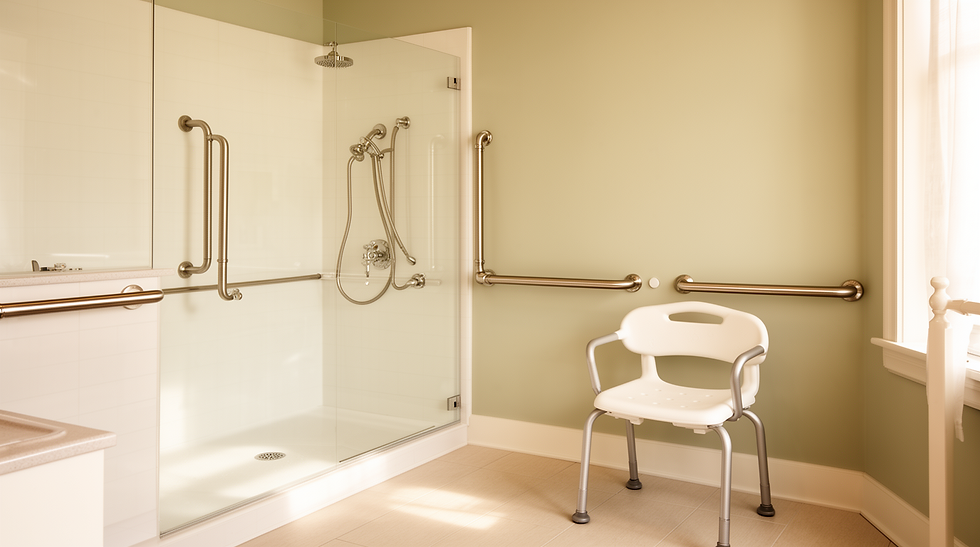
Bathrooms can be challenging because of wet surfaces and frequent movements such as stepping into a shower or getting up from a toilet. Strategically placed grab bars can provide an additional point of support near showers, tubs and toilets. Today’s grab bars don’t have to make a bathroom look clinical. Modern finishes and streamlined designs can blend naturally with existing fixtures.
2. Consider a shower seat
A shower seat provides a convenient place to sit while showering, washing your feet or simply taking a moment to rest. Look for seating designed specifically for wet environments with stable, slip-resistant feet.
3. Upgrade to a handheld shower
A handheld showerhead makes it easier to direct water exactly where you need it. It can be especially useful when paired with a shower seat.
4. Improve nighttime lighting
Getting out of bed at night often means navigating a dark bedroom, hallway or bathroom. Motion-activated lighting can automatically illuminate these spaces without requiring you to search for a switch.
Consider adding lighting along the path from the bedroom to the bathroom.
5. Reduce unnecessary clutter
Frequently used items should be easy to reach. Organizers beside the bed, bathroom storage and accessible shelving can help reduce unnecessary bending, stretching and searching.
6. Add support around the toilet
A toilet safety frame or raised toilet seat with arms can provide additional support when sitting down or standing up.
7. Look for slippery surfaces
Review bathrooms, entryways and other areas where moisture may accumulate. Consider slip-resistant mats or other surfaces specifically designed for the location where they'll be used.
8. Keep everyday essentials within reach
Place commonly used items between approximately waist and shoulder height whenever practical. This can reduce the need to reach high shelves or bend toward the floor.
9. Create clear pathways
Furniture, electrical cords, decorative objects and small rugs can interfere with walking paths. Keep frequently traveled areas open and easy to navigate.
10. Think about tomorrow—not just today
Home safety is easiest when improvements are made proactively. Small changes today can help your home continue supporting your lifestyle for years to come.

At EverHome, we believe home safety products should provide practical support without making your home feel like a medical facility.
A safer home can still feel like your home.

Comments